By Fedor Vasilev – Corporate Photographer in Berlin
Photography without editing can be a challenging endeavour, as it requires us to capture the perfect shot at the moment. It is essential that the photographer has a good eye for detail and be able to recognize the perfect balance of light and shadow to capture the desired effect. Taking the time to study the scene in front of you and adjusting your camera settings will help you achieve the desired results. To create a masterpiece in 90% of cases you will need to edit your photograph at least a bit. It is possible to take great photographs straight out of your camera and I want to offer you to try it.
Table of Contents
Editing paradox
Even though it requires less work, only highly skilled photographers can capture and publish great photographs without post-processing. However, it is rare for a skilled photographer not to edit their photographs.
Professionals in the photography industry typically embrace post-processing as an integral part of their creative process, even when they possess the skills to capture high-quality raw images. This additional step allows them to fine-tune and enhance their photographs, elevating their work to new heights.
On the other hand, it’s worth noting that many beginners, while facing the challenge of correcting various errors in their raw image files, tend to underutilize post-processing. Beginners mostly do photography without editing. They might be hesitant to engage in extensive editing due to limited experience or a desire to preserve the authenticity of the moment. However, as they progress in their photographic journey and gain a deeper understanding of the art, they often discover the power of post-processing in refining their images. So, while professionals use editing to enhance their already exceptional work, beginners might initially undervalue its potential for transforming their photography.
Explore ‘Photography Made Better’: Unleash Your Inner Photographer with My Course!
Photography Made Better
Elevate your photography with my course, “Photography Made Better.” Dive into the essential elements of photography, focusing on artistic expression and personal guidance. This course is unlike any other, offering challenges and unique tips to redefine your photography. With exclusive access, it’s designed for passionate individuals ready to transform their photographic skills. Join today, unleash your creativity, and let your unique voice shine. Enrol now for an unparalleled photographic journey! 📸🌟🚀
Photography Without Editing Might Give You The Right Mindset
I described above why editing is crucial for photography but what if we put it aside and try to focus on what we get out of the camera? I myself quite often rely on editing and some of my photographs look completely different before and after post-processing.
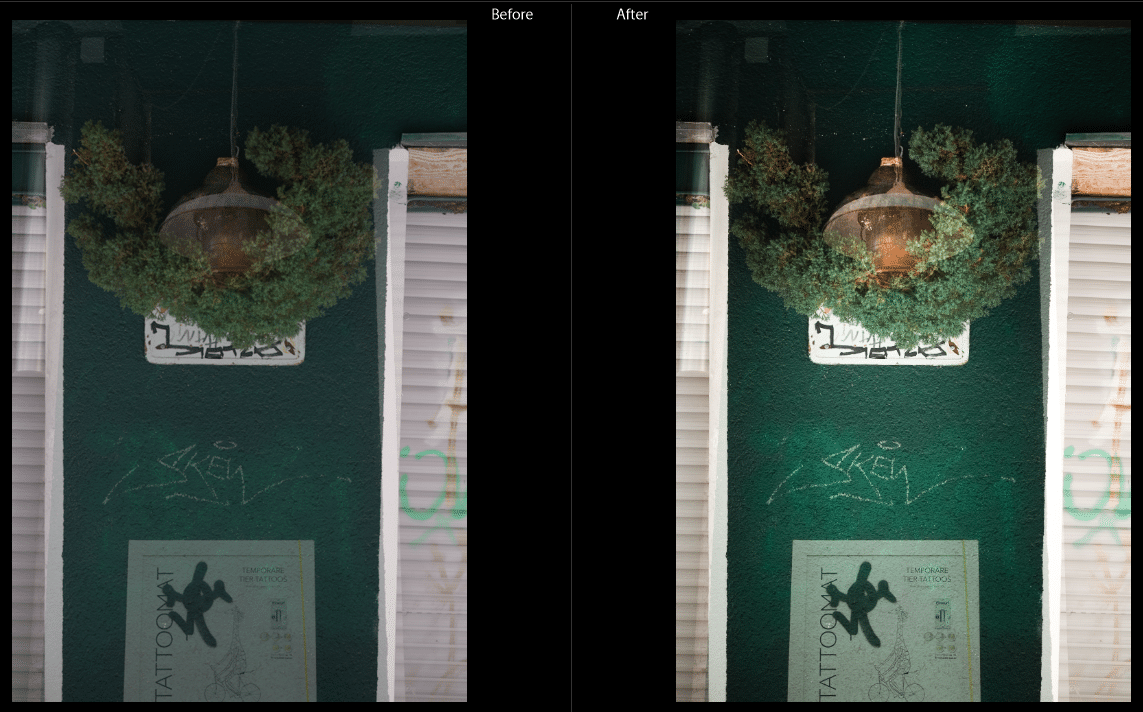
When I shoot different scenes on the streets or when creating some fine art photographs, I often make the lighting more interesting in post-production. Like in the example above I brought more attention to the main subject in the middle by applying an adjustment brush and turning up the exposure in this area of the photo.
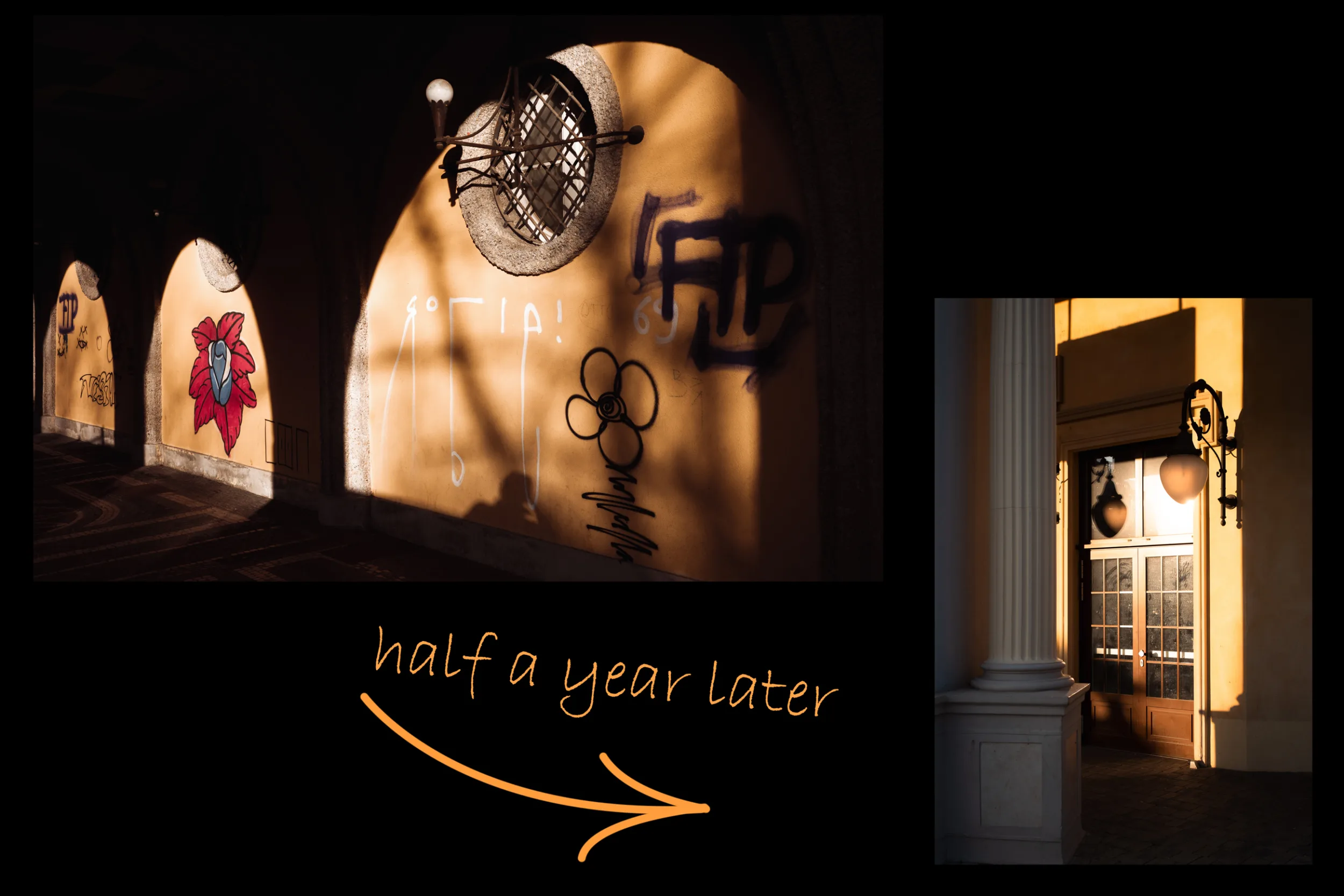
But what if I were to search for more interesting light when taking photographs, without relying on editing at all? Of course, it wouldn’t work on cloudy days because the light is flat and even everywhere. However, on sunny days, it is easy for me to search specifically for interesting light and essentially photograph the light itself.
Taking up the challenge of creating photography without the aid of post-processing demands a skillful approach to capturing light in the environment. It requires meticulous planning and attention to detail. By staying focused on the photography process, one can achieve a good photograph, bearing in mind that there is no room for error as editing cannot remedy any mistakes. As such, it is imperative to avoid any errors during the shoot.
Studio Photography Without Editing

When working in a studio, I have to adjust all of the lights perfectly and because of that I usually don’t need to edit the photographs that much. I always do some retouching, not too much to keep it natural. But the lights and colours are most often perfect straight out of the camera. So to do photography without editing, I would advise keeping the same approach as when working in the studio.
9 Reasons Why Photography Without Editing Is Challenging
- Imperfections in Raw Shots: Unedited photographs often contain imperfections, such as exposure issues, colour discrepancies, or unwanted elements, making it challenging to achieve a polished result straight from the camera.
- Limited Creative Control: Post-processing provides photographers with the ability to fine-tune and realize their creative vision. Without editing, the extent of creative control is constrained, making it difficult to bring out the full potential of an image.
- Varied Lighting Conditions: Natural lighting conditions can change rapidly, leading to inconsistencies in exposure and color. Editing allows photographers to harmonize these variations, which is challenging to achieve solely through photography. For example, you start shooting at 6 pm and finish at 8 pm but you want to have a consistent series where lightligh looks similar across your images
- Technical Limitations: Even professional photographers may encounter limitations with their equipment or conditions that are beyond their control. Editing serves as a valuable tool for rectifying such technical shortcomings. I shoot on a full frame camera but still there’s some distortion when I use wide lenses.
- Artistic Enhancement: The artistic aspect of photography often necessitates post-processing to evoke emotions, tell stories, and provoke thought. Achieving these artistic goals without editing can be a formidable task.
- Error Correction: Beginners and seasoned photographers alike make mistakes in their shots. Editing is a valuable tool for correcting errors and enhancing the overall quality of the photograph.
- Preservation of Authenticity: While some photographers strive for an authentic, unedited look, achieving this consistently can be a challenge, as it often requires meticulous attention to detail during shooting. Sometimes cameras do not capture the colours and light in an authentic way but it can be fixed during post processing
- Variable Environments: Photographers often work in unpredictable environments where conditions change rapidly. Post-processing helps adapt and enhance images captured in challenging settings.
- Evolving Standards: The expectations for photographic quality are continually evolving, and professional standards often include post-processing. Meeting these standards without editing can be positively demanding.
My way of taking photographs.


I don’t think I could ever do photography without editing because it’s about half of the job I do. Sometimes I don’t have perfect lighting, but I can fix that while editing my photographs by making parts of the photos darker or brighter.
The edit that I do to almost every photograph is cropping! Photography composition is crucial, and by simply cropping a photograph, you can improve it significantly.
At the same time, I always try to take photographs(on the scene) in the best way I can so that the least amount of editing would be required. It’s always better to take a perfect shot out of the camera rather than rely on editing.
To achieve satisfactory results without the need for editing, one must capture a perfectly composed image straight out of the camera, with ideal lighting, and by shooting in JPG format. Raw files, especially on Sony cameras, tend to be quite average, which is not a bad thing. Raw pictures taken with professional Sony, Canon, or Nikon cameras often appear dull and grey, as they are meant to be edited in post-production. This is why some individuals believe that their iPhones produce better images than professional cameras, as they compare the automatically adjusted JPGs from their iPhones with the preview of the Raw data from Sony’s sensor.
Consequently, capturing a shot that requires no post-processing appears to be an incredibly challenging endeavour for me.
Take on This Challenge
If you do film photography then it’s quite obvious that it is the type of photography without editing. But film photography is already quite challenging. When I do film photography I very often at least crop my shots. I would say if you achieve good results when taking photographs and not cropping them you will be a master of photography.
If you are trying this on film and need a roll, my friends at Berlin Photo Studio have a good variety of film and film photography equipment. This is an affiliate link, so buying through it also supports me.
To do photography without editing:
- Try to adjust your composition as much as possible before you take the picture.
- Don’t forget to focus on the light, and expose your shot quite bright straight away (I usually underexpose the photographs to keep the highlights protected).
- Apply colour filters if you want to make your colours appealing straight out of your camera.
- Shoot in Jpeg! Raw files have a bit more dull colours since they are meant to be edited.
- When using artificial light, highlight your subject to focus the viewer’s attention on it (you can use a reflector or a flashlight).
- Change the style setting in your camera. At least you can get a bit more contrast that way.
Still, photography without editing has some appeal. You can tell 100% that it’s authentic. The only choice you have is to select your composition and adjust the setting as perfectly as you can.
When committing to taking photographs and not editing them, you may need more time to adjust the angle and exposure. But in the long run, it will help you to get into the right workflow when you first rely on how you take a photograph and only then enhance it in post-production. I recommend you go out from time to time with a certain limitation. Knowing that you shouldn’t edit photographs after you take them. This is your end product, the raw image. Putting yourself into these limitations will help you to focus solely on taking pictures.
To learn how to take better pictures you can also check out these posts:
Top 10 Ways To Improve Photography Skills. Learn Photography Faster
5 Best Photography Exercises For Creativity
Some Q&As
Why is editing considered an integral part of photography by many professionals?
Editing is seen as a crucial step by professionals as it allows fine-tuning and elevating images to new heights. Almost all highly skilled photographers often utilize editing to enhance their already exceptional work.
What challenges do beginners face in opting for photography without editing?
Beginners may encounter challenges such as limited experience, and errors in raw shots that can’t be fixed. The best solution would be to choose AV mode since that will make it easier to get a perfect shot out of the camera and preserve the authenticity of the moment.
How does studio photography differ in terms of editing requirements?
Studio photography often involves meticulous lighting adjustments, reducing the need for extensive post-processing. However, minor retouching might still be necessary to maintain a better look.
What are the reasons why photography without editing is considered challenging?
Challenges include imperfections in raw shots, limited creative control, varied lighting conditions, technical limitations, the need for error correction, variable environments, and evolving standards. Simply saying, it’s harder to achieve great results when you omit post-processing
How does the choice of file format impact the need for editing?
Shooting in JPEG format can produce more visually appealing colours straight from the camera, as RAW files might appear dull and require editing for enhancement.
What tips can help in achieving better results without editing?
Adjusting composition before capturing the shot, focusing on light and exposure, using colour filters on lenses, shooting in JPEG, utilizing artificial light to highlight subjects, adjusting camera style settings for more contrast, and dedicating time to perfect the image before capture.
Why might photography without editing be appealing despite its challenges?
Photography without editing is seen as authentic and challenges photographers to focus solely on capturing the perfect shot without relying on post-processing adjustments. This approach offers a unique, unaltered perspective.
Even in the times of film photography, there was always a dark room where you could manipulate the image. Film photographs can be edited in a dark room to darken some areas of the image and brighten the other ones, just like in Photoshop but manually. Still more people did no editing to their photographs in the 20th century
What’s the significance of limitations in photography without editing?
Setting limitations on editing after the shot encourages photographers to refine their skills in capturing images without reliance on post-processing. This limitation can help in focusing solely on the art of photography during the shooting process trying to remember about lighting conditions and composition. Shoot as if you could never fix your errors and your photos will look outstanding.
A Few More Words
I will also try out doing photography without editing as a challenge and share my results in one of the next posts. For now, I wish you a lot of fun trying out this challenge and working on creating masterpieces straight out of your camera.
Thank you for reading till the end! If you would like to support me, you can subscribe to my blog, tell about it to someone who might be interested in photography and support me on Patreon. That way I will be able to produce more high-quality content for you and share helpful tips.
pin this post for later
Hover on your preferred image to see the red “Save it” button with a Pinterest logo. Clicking on it will open a new tab to pin this blog post to one of your boards.